

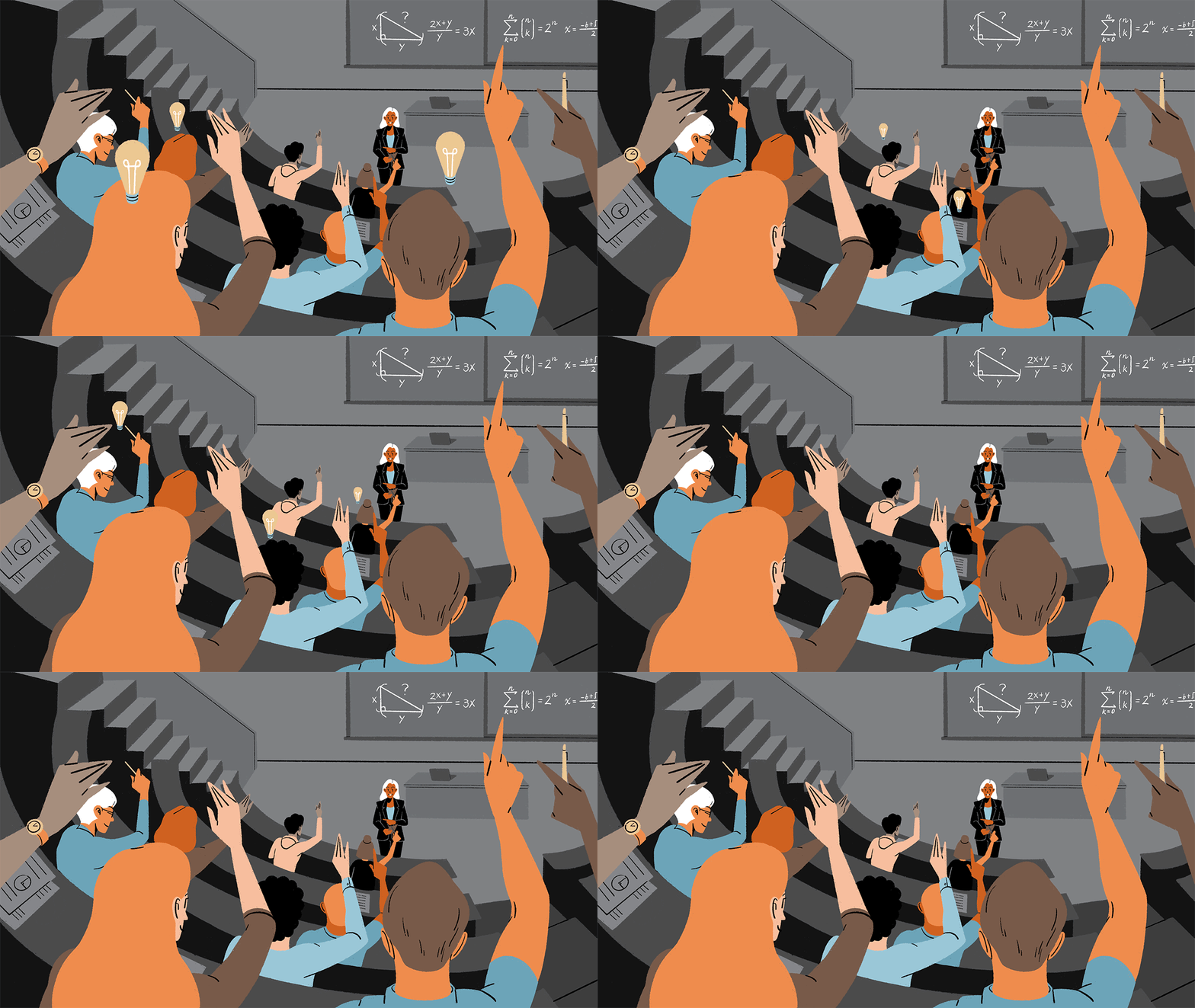
In today’s uncertain world—shaped by economic challenges, climate crises, conflict, and shrinking global support—the future of millions of children is at risk. Classrooms are filled with tomorrow’s leaders, and the quality of education they receive will determine the opportunities they can access later in life.
This makes one thing clear: building education systems that truly work for every child is more urgent than ever.
While global efforts have successfully increased school access, a critical issue remains largely unaddressed—if most students aren’t learning basic skills like reading, can we really call the system inclusive?
Rethinking What Inclusion Really Means
Over time, education systems have improved in welcoming children with diverse learning needs, including those with conditions like dyslexia, dyscalculia, or attention-related challenges. In the past, many of these students were excluded or misunderstood due to limited awareness.
Today, the focus has shifted toward placing all children in mainstream classrooms. Governments and institutions have made progress in increasing enrollment and improving access.
But inclusion isn’t just about being present in a classroom—it’s about actually learning.
In many low-resource settings, the emphasis has been on access rather than the quality of instruction. This creates what experts call “low-learning environments,” where students attend school but fail to develop foundational skills.
The Global Learning Crisis
Across many parts of the world, especially in low- and middle-income countries, millions of children spend years in school without mastering basic literacy or numeracy.
- Around 70% of 10-year-olds in these regions cannot read or understand a simple text
- In low-income countries, that number rises to 90%
This is a critical stage in development. By age 10, children are expected to transition from learning to read to reading to learn. Without this foundation, future learning becomes significantly harder.
For children with learning differences, the situation is even more challenging. Simply being in school does not guarantee progress.
Why Effective Instruction Matters
In systems where most students struggle, inclusion must go beyond access. It requires teaching methods that actually help children learn.
Research shows that improving instruction—especially through structured, evidence-based approaches—benefits all learners, including those with learning differences.
Programs like the Luminos initiative in sub-Saharan Africa demonstrate this clearly. By combining the science of reading (particularly phonics-based methods) with culturally relevant teaching, they’ve achieved significant improvements in literacy among underserved students.
Their approach focuses on:
- Structured, evidence-based teaching methods (like phonics)
- Supportive and engaging classroom environments
- Continuous monitoring of student progress
- Targeted support for struggling learners
The Power of Strong Foundations
Studies show that the same teaching strategies that help children with dyslexia also improve learning outcomes for all students.
For example, a 2023 study in Liberia found that students in a phonics-based program improved from reading 4 words per minute to 29 words per minute, compared to just 8 words per minute in traditional settings.
This highlights a key idea: effective teaching doesn’t just support a few students—it raises the standard for everyone.
Learning Thrives in Positive Environments
Academic success isn’t just about curriculum—it’s also about how students feel.
Children learn best when they feel safe, supported, and engaged. Classrooms that encourage participation, joy, and confidence lead to better attendance and stronger outcomes.
Programs that combine interactive teaching methods—like games, songs, and group activities—help students stay motivated while also developing social and emotional skills.
In fact, follow-up studies show that students who experienced such environments became more confident, motivated, and capable learners over time.
Identifying and Supporting Struggling Students
Many systems try to identify learning difficulties early through assessments. However, in classrooms where most students are behind, it can be difficult to distinguish between true learning differences and the effects of poor instruction.
This is why strong teaching must come first.
Once effective instruction is in place, it becomes easier to identify students who need extra support. Tools like early literacy assessments can help track progress, but ongoing, real-time feedback is even more valuable.
Teachers need simple, practical tools to understand each student’s progress and adjust their methods accordingly.
Practical Strategies for Inclusive Classrooms
In resource-limited settings, individualized instruction can be difficult. Instead, inclusion can be strengthened through classroom-wide strategies such as:
- Adjusting teaching pace to suit different learning speeds
- Using interactive methods like games and storytelling
- Encouraging peer learning and group work
- Organizing mixed-ability seating
- Providing extra support through small group sessions
The goal is not to separate struggling students, but to ensure everyone benefits from effective teaching.
Redefining Inclusion for the Future
True inclusion is not just about getting children into schools—it’s about ensuring they learn and grow once they’re there.
This requires a shift in focus:
- From access → to outcomes
- From enrollment → to learning
- From separation → to shared progress
When education systems prioritize strong instruction, supportive environments, and continuous improvement, every child gets a real chance to succeed.
Without this shift, schools may expand—but meaningful learning, and the opportunities it brings, will remain limited.
