

While it’s a viable concept in itself, the NexPad is more intriguing for the future it points to.
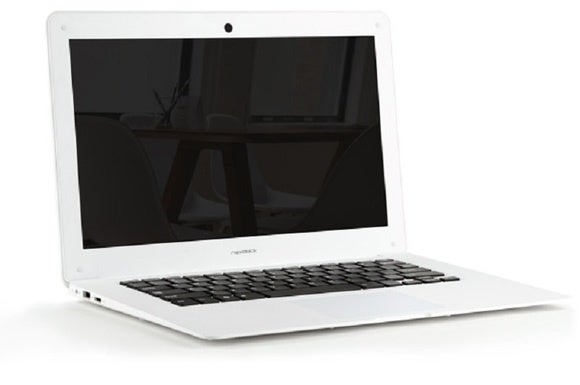
Credit: NexDock

For an estimated price of $149, users receive a laptop “shell” comprising a 14-inch display, 10,000mAh battery, and Bluetooth keyboard in a single unit. (As WindowsCentraloriginally reported, you can have the NexDock for $79.)
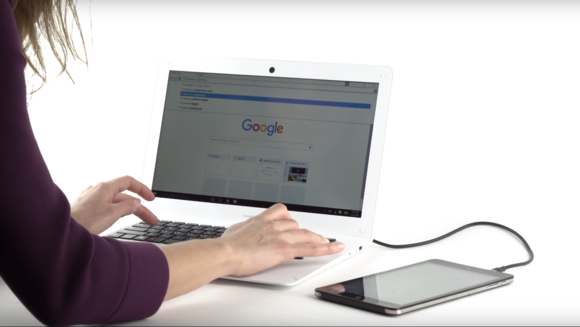
Plug a phone or tablet running Windows 10 or Android into the NexPad, and you have a more productivity-oriented environment, with the mobile device serving as a secondary screen. (According to NexDock, you could also connect the shell to a Raspberry Pi or something like the Intel Compute Stick, or to an iPhone via a display connector.) The NexPad doesn’t contain a processor, memory, or storage; all that has to be provided by your small computing device.
Why this matters: We’ll let NexDock explain. “Imagine a ‘computer’ that one day you can use as Chromebook, and the next day as an Ubuntu developer laptop. Imagine a longer-lasting computer that you can easily upgrade and customize to become a powerfulWindows gamer laptop,” the Indiegogo page says. “We envision a world where we carry only our mini PCs, which connect to any screen in the world to turn them into tablets,laptops, and PCs.”
NEXDOCK
The future isn’t quite here yet
But Windows 10 Mobile fans probably won’t receive the “Continuum laptop” that the Indiegogo page describes.
Microsoft uses a USB-C-to-USB-C connector cable to connect phones like the Lumia950 to its Display Dock. Look closely at one of the embedded videos on NexDock’s Indiegogo page and you’ll see what looks like a dongle connecting the phone to the NexDock, which wouldn’t be necessary if the port was USB-C. (The NexDock specifications list two “USB” connectors—nothing more specific than that.)
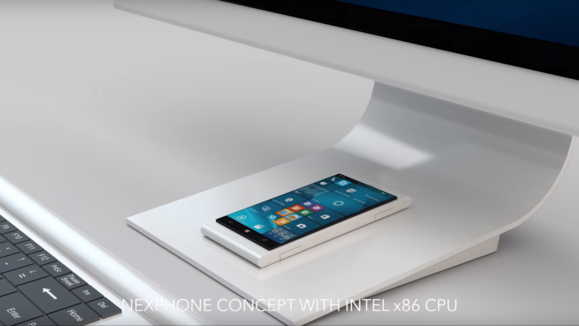
It actually appears that the phone connects to the NexDock via its built-in HDMI-in connector, making the device just a larger, external display, albeit with a built-in keyboard. There’s nothing wrong with this. But it does render the NexDock something on par with existing external USB displays, or those skeleton keyboard cases for the iPad.
NEXDOCK
There is, however, hope for the future. External USB displays are typically powered by a USB 3.0 cable. Most phones use a microUSB cable. With the advent of USB-C, phonesand peripherals will begin standardizing on a single cable, streamlining connections between the two.
NexDock believes in a future where millions of Sun Microsystems-style dumb terminals are ready to connect to phones or tablets, as its launch video indicates. That’s certainly possible.
In the interim, though, I’d like to imagine a future where a product like the NexDock could be specifically designed for a phone like the Lumia 950 or Galaxy S6, where a built-in “bay” is the means of connecting the device—the same way older boomboxes were designed to hold iPods. That, I think, would truly pave the way for phones to replace the traditional laptop, a scenario that becomes more likely as the performance of embedded microprocessors continues to increase.
[“source -pcworld”]
